How SMBs Can Refinance a Business Loan in Australia

Australian small and medium businesses (SMBs) can refinance a business loan almost immediately after taking it out, though most lenders recommend waiting at least 3 to 6 months to establish a clean repayment history. However, because refinancing is not a one-size-fits-all solution, it requires a thorough assessment of your current financial goals, risk tolerance, and the long-term cost of switching.
According to the Lending Indicators (March Quarter 2026) released by the Australian Bureau of Statistics (ABS), commercial refinancing and restructuring remain highly active as businesses navigate shifting rate environments.
In the current Australian market, commercial refinancing generally falls into two distinct categories:
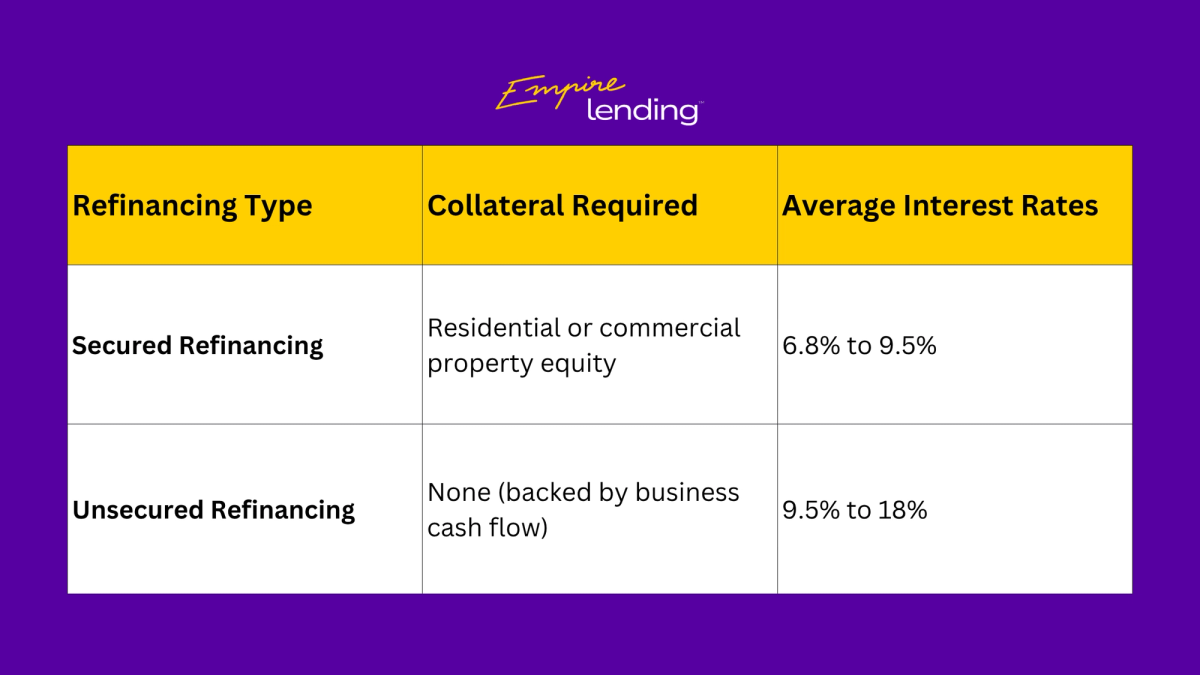
Key Takeaways from Empire Lending
Assess your equity: Determine if you qualify for lower-cost secured refinancing using property assets.
Calculate break costs: Review your current contract for early exit fees before switching lenders.
Time your application: Initiate your refinance by May to ensure processing finishes before June 30.
Gather financial statements: Prepare updated cash flow records to fast-track the lender approval process.
Why You Should Refinance Before EOFY for Tax Reasons
Refinancing your business loan before the end of the financial year (EOFY) allows you to optimise your tax position. By restructuring your debt before June 30, you can strategically manage borrowing costs and interest expenses.
Here are the reasons to refinance before the tax year ends:
Deducting Borrowing Expenses: Upfront costs such as loan establishment fees, registration fees, and legal costs can be claimed as tax deductions. While borrowing expenses over $100 are typically spread over five years (or the term of the loan, whichever is shorter), starting this process before EOFY allows you to claim your first period’s deduction in the current financial year.
Deducting Accrued Interest: When you pay off an old loan to refinance, any interest accrued up to the exact payout date is generally deductible. Refinancing before June 30 allows you to bring these deductions forward into the current tax year.
Immediate Write-Off of Remaining Costs: If your previous loan had remaining, unamortised borrowing costs, paying off that loan early allows you to write off the entire remaining balance of those old costs in the year the loan is terminated.
Optimising Balance Sheet Presentation: Restructuring short-term debt into long-term debt just before EOFY improves your working capital. This presents a much healthier financial position to the Australian Taxation Office (ATO), shareholders, and future creditors.
How Much Does It Cost to Refinance a Business Loan?
The total cost for refinancing a business loan depends on your current lender’s terms and the structure of your new loan. To make sure the switch is worthwhile, compare your business loan options against the long-term savings you expect to gain.
Here are the main costs to factor in:
Exit or discharge fees: Some lenders charge a fee when you pay out your loan early.
Fixed-rate break costs: If you leave a fixed-rate loan before the term ends, you may face break costs that can change with market conditions.
Application or establishment fees: Your new lender may charge a fee to set up the facility.
Valuation costs: If the loan is secured, the lender may require a property or asset valuation, which can add to the upfront cost.
Frequently Asked Questions
Can I refinance a business loan with the same lender?
Yes, you can refinance a business loan with your current lender, often called a loan variation or internal restructure. Doing this can simplify paperwork and potentially lower upfront application fees, provided your credit profile remains strong.
However, sticking with the same institution means you might miss out on more competitive interest rates or flexible terms. It is always wise to compare the broader business finance market to leverage your position and negotiate the best possible deal.
Are there exit fees for paying off a business loan early in Australia?
Yes, many Australian lenders charge exit fees, discharge fees, or early repayment penalties when you pay off a business loan ahead of schedule. These costs vary significantly depending on whether your loan structure is secured, unsecured, variable, or fixed.
How do changing interest rates affect my commercial refinancing eligibility?
Changing interest rates directly affect your debt-service coverage ratio (DSCR), which lenders use to assess refinancing eligibility. Rising market interest rates increase borrowing costs, shrinking your business's borrowing capacity and sharpening lender scrutiny on your free cash flow.
Explore Business Loan Refinancing Options with Empire Lending
If your current loan is expensive, inflexible, or no longer suited to your business, refinancing could help improve cash flow and simplify your debt structure. The best time to act is when the numbers support the move, not just when EOFY is approaching.
Fill out Empire Lending’s form to get matched with the right lender and explore your refinancing options.
Posted by
